Biogas Backpack for Tackling Energy Poverty
What is a biogas backpack made of?
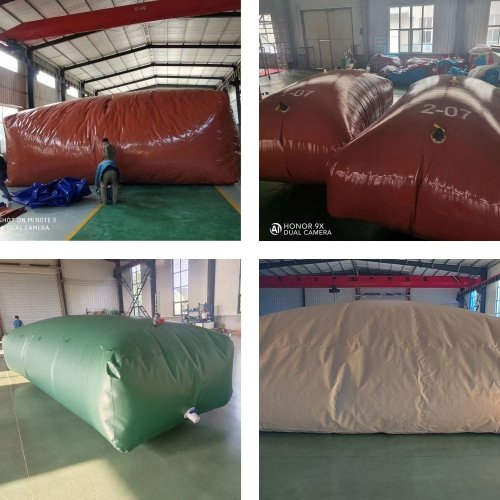
It is a non-pressurized, foldable bag that stores biogas produced in a biodigester and delivers it for household use, especially cooking. It is complemented with modular burners, stoves, essential fittings, and other components.
Capacity: One model can hold about 1.2 m³ of biogas, equivalent to roughly 6 kWh of energy, which is sufficient for 2–4 hours of daily cooking in many households.
Safety: The backpack is not pressurized, reducing the risk of explosion. In addition, it is made of durable materials that can withstand daily use.
2. How it works / mode of use
Users produce biogas with a biodigester (e.g., manure or other organic waste). Part of the gas is stored inside the backpack.
The backpack is then connected to a stove or burner through a hose for cooking. The system allows the gas to be used in a controlled manner.
The backpack also enables households with surplus biogas production to sell the excess gas: other families can purchase gas stored in these backpacks. Thus, the backpack is not only for personal use but also becomes part of a local micro-business model.
3. Advantages and challenges
Advantages:
Improved quality of life: reduces the use of firewood or coal, lowers smoke exposure, and decreases health risks.
Easier cooking: gas can be switched on/off quickly with better heat control.
Income opportunities if surplus gas is traded.
Challenges:
Maintenance: if the biodigester or backpack is not properly maintained, the system may stop functioning.
Initial cost vs. user affordability: although relatively low-cost, economic and logistical barriers still exist.
Scalability and durability: ensuring materials are robust and the system can be maintained over the long term.